Tag Archives: Astrology

Neptune Retrograde square Saturn…a meditation on the persistence of beauty…

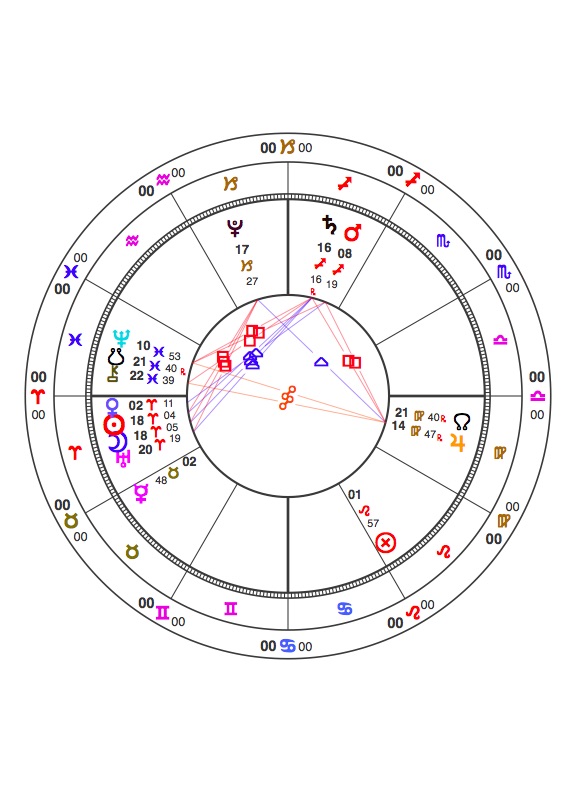
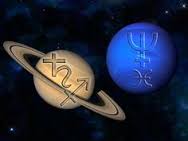
Neptune turned retrograde on Monday 13th June 2016, at 12 degrees of its own sign of Pisces, making a second exact square with Saturn in Sagittarius on 18th June. The third and final square in this difficult planetary dance takes place at 10 degrees of their respective signs on 10th September 2016, after which the square gradually loses potency, reaching 10 degrees of separation by the end of 2016.

A great battle between order (Saturn) and chaos (Neptune)  has been raging since the end of 2015 in particular,  as mass migration of peoples – often by sea – fleeing wars and persecution at a level not seen since the end of the Second World War, has challenged European nations’ capacity to cope. With the gradual waning of the turbulent, violent, purgative years of  Uranus in Aries square Pluto in Capricorn, at the same time as the waning of  Saturn square Neptune,  we can only hope for more settled times ahead.

At a personal level, I’ve always found Saturn/Neptune aspects especially difficult. Some of us are better than others at dancing on a wobbly board suspended over the long drop into chaos! However, as always when the great planetary archetypes combine, the level at which we engage with the combination through our individual birth charts always carries a challenge to become more self-aware, more constructive in our engagement with the areas of life highlighted.

And – let us never forget that even the most difficult planetary combinations can manifest in startlingly positive experiences which can take our breath away.

This was certainly my experience on Monday 13th June 2016, the day Neptune turned direct approaching its exact square to Saturn. I have always been susceptible to the seductive beauty of art, sculpture in particular. On that day, I was with my husband in London. Having attended a most enjoyable Astrology Student Conference with two of my students, he and I were intent on a day together taking in some culture. We had booked tickets for an exhibition at the British Museum that morning. That exhibition turned out to be the most atmospheric, beautiful, awe-inspiring manifestation of the Saturn/Neptune combination I could possibly have imagined.

Sunken Cities Exhibition

Sunken Cities Exhibition

About 1,300 years ago two Egyptian cities, Thonis-Heracleion and Canopus, sank into the Mediterranean Sea. They’re still there, perfectly preserved. (As yet, only 5% of the vast undersea sites have been excavated.) They were inhabited not only by native Egyptians but also Greeks and Romans, and eventually Byzantine Christians. The cities were known from texts — Egyptian decrees, mythology and the writings of  Herodotus — but no one had actually seen them.

Then, two decades ago, underwater archaeologists began bringing up objects and artworks from the seabed. Some are enormous and weigh several tons. They included massive representations of human-shaped gods, deities in the form of animals, towering kings and queens, giant bearded heads of Greek gods, enormous pharaoh heads, black stone slabs with intensely intricate lines of hieroglyphs and stone coffins.

There were also domestic objects, coins, jewellery, incense burners and votive offerings. A selection is now part of this, the British Museum’s latest exhibition, which explores the complicated, rich culture over many centuries of the two cities.

Click HERE to see a brilliant video clip which gives at least some impression of the atmosphere of the exhibition, and the sheer scale of the underwater archaeology.

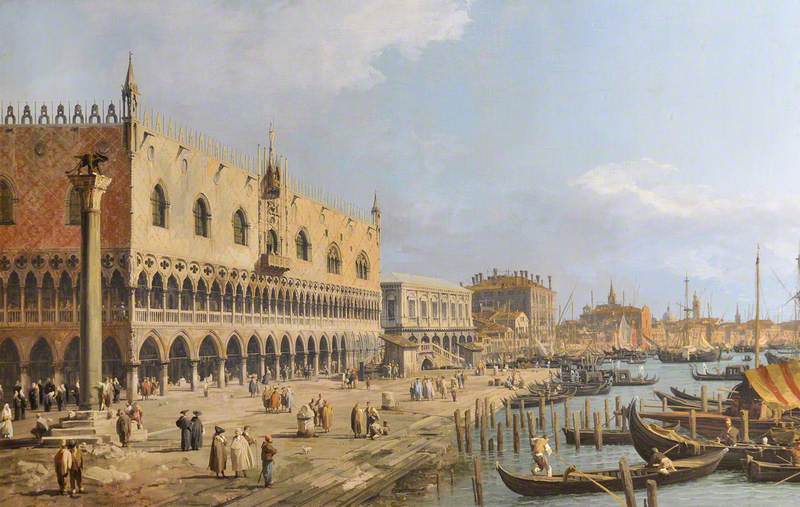
But our Neptune day wasn’t yet over! After an enjoyable visit to London’s wonderful Astrology Shop in Covent Garden run by the redoubtable Barry Street, we dropped by the National Gallery: to visit some favourite paintings, and just to marvel at the sheer scale and beauty of the building. Wandering with a truly international throng of spellbound art-lovers through room after room stocked with eight hundred years of amazing art, we were once again entranced.

Botticelli, Leonardo, Rembrandt, Canaletto, El Greco, Rubens, Vermeer, Van Gogh, Monet, Turner, Picasso…all our favourites and thousands more were there. Not reproductions: THE REAL THING.

We strolled back to our hotel, heads and hearts full of gratitude for being able to share such wonderful art and sculpture with  so many of our fellow citizens from all over the world. Neptune knows no boundaries of race, colour, creed – or artistic gifts. The day had been wonderful:a profound reminder that no matter how much ugliness, cruelty, destruction and evil there certainly is in the world, no-one can crush from the human soul our longing to connect with the Divine through meditation, prayer, music and all the Arts – “…beauty is truth, truth beauty,…” as poet John Keats put it so memorably.

******

Zodiac

Zodiac

800 words copyright Anne Whitaker 2016
Licensed under Creative Commons – for conditions see Home Page


Some thoughts on retro Mars, Saturn – and Muhammad Ali

Well, folks, transiting Mars is retrograding over my Scorpio IC/South Node, transiting Saturn retro squares my Ascendant/Descendant whilst transiting Neptune hovers there. Jupiter in Virgo transiting the First House, opposing one of these and squaring the other,  is persecuting me with billowings of detail and admin which I can’t be bothered doing…I have a series of posts on the Nodes lined up, waiting to be edited, but can’t seem to get around to it.

Aaaargh!!!

In short, I am being incredibly, uncharacteristically, lackadaisical. 

Anyone else out there feeling like this? Don’t all of you rush to tell me at once. On second thoughts, my  guess is, you can’t be bothered. But never mind…Mars goes direct at the end of June, catching up with himself by 22nd August 2016. Saturn goes direct on 13th August, catching up with where HE left off by 20th November 2016. That interminable Saturn/Neptune square will make its last exact point on 10th September 2016 and start to wane thereafter.

So, by December 2016 we should all be demons of frantically focused forward motion. Or maybe we will all wait until the New Year…

Anyway, I thought I’d keep you informed and entertained by a fellow astrologer who, if  affected by the above, is not in nearly as bad a state as I am! On the day of Muhammad Ali’s passing last week, I asked my husband, who is not an astrologer, what he thought was The Greatest’s Ascendant.

“Leo – absolutely!” he replied. How right he was.

Here, whilst I get around to eventually regaining my bearings ( by next week, hopefully!)  is Christina at The Oxford Astrologer‘s fine analysis of the incomparable Ali’s horoscope. I’m sure you will enjoy and appreciate it.

Muhammad Ali: Leo Rising

Zodiac

Zodiac

300 words copyright Anne Whitaker 2016
Licensed under Creative Commons – for conditions see Home Page


The attraction of new horizons…what is the Jupiter Cycle?

Optimistic, expansive and meaning-seeking Jupiter has been in the sign of Virgo since 11th August 2015, driving us all crazy ( well, me, anyway…!) with its cheerfully relentless insistence on work, work, work, and detail, detail, more detail.. . I jest, but only slightly….  Excitement is however, already building in anticipation for Jupiter’s shift into Libra on 9th September 2016, where he will remain until 10th October 2017; try googling ‘Jupiter’s shift into Libra’ and you’ll see what I mean.

Nearer the time, there will be torrents of words offered across the web regarding what this shift is likely to bring for all of us in general, but folks with the Sun and other planets in Libra in particular. However, for today I want to concentrate on  Jupiter’s 11-12 year cycle.

What is the Jupiter Cycle?

As ever, it is important at the outset of a general article to stress that one can only really judge in detail what the essence of any planetary shift is likely to be from consideration of the whole horoscope or birth chart. However, it is certainly possible to sketch out a broad picture which can offer some perspective: both to readers with some astrological knowledge, and to those of you with none who are curious to know more.

Each of the planets, travelling through the twelve signs of the zodiac as viewed from Earth, has a cycle of differing length. Pluto, currently in Capricorn, will take 248 years to traverse the 360 zodiacal degrees, returning to that sign long after we are all dead and gone!

Saturn’s cycle, on the other hand, is a much shorter 29/30 years. This is known as the famous Saturn Return, returning to the place it occupied at our birth when we are 29/30 years of age – inviting us all to grow up. 

Jupiter and Saturn together form a symbolic, complementary whole: as its cycle unfolds, Saturn helps us to be realistic and to set limits without which no maturation or growth can take place. Jupiter creates contrast and balance to this. It energises that optimistic, expansive part of us which reaches out to the pleasure of new experience, new learning and understanding. Its natural exuberance can make life a fun, joyful experience.

It can also cause us to over-reach our limits, expect more than life can realistically deliver. That facet needs to be watched carefully when Jupiter is very active in our lives…

Jupiter’s cycle is 11-12 years: 11.6 years to be exact. It’s an easy one to track, being accessible both to those of you who know some astrology and those of you who don’t. Everyone can track though their lives, measuring the Jupiter cycles: Jupiter returns to its location in your birth horoscope at 11/12 years of age, 23/4, 35/6, 47/8, 59/60, 71/2, 83/4 in a currently average lifetime.

What do we look for in the Jupiter cycle? In essence, the start of each cycle represents the opening out of a whole new learning period, whose archetypal purpose is to expose us to new experience, new learning – all kinds of travelling within both inner and outer life. 

Real life flesh on symbolic bones…

These experiences may and do vary hugely from one person to another, taking their flavour from the zodiacal sign and house in which Jupiter was located when you were born. It’s important to colour theory with some lively examples of what actually happens to real people when those shifts take place. I already have some interesting material to share. Let’s go!

 At 23/24 (Jupiter in Sagittarius in 9th house) you might take off to Australia to do a postgraduate Diploma in Adult Education. Your friend (Jupiter in Capricorn in 6th house) might not travel anywhere, but concentrate on mastering a new skill like carpentry which enables him after a few years’ apprenticeship to set up his own business.

In the meantime, my neighbour down the street (Jupiter in Cancer in 5th house) might marry at 23/4 and have three children in rapid succession before the age of 30. In a real-life example, “Alexa” said: “My second Jupiter return, aged 24, coincided with me buying a house – natal Jupiter is in Cancer, which is appropriate, of course, and the house was bigger (Jupiter) than we needed for just the two of us, so we could have space for lodgers.” 

These are very different branches, Jupiter in differing signs and houses of the zodiac at birth: but the same underlying principle of expansion and growth of experience, understanding, and (hopefully!) some wisdom, shines through them all.

You can also detect the archetypal lifelong themes provided via Jupiter’s placing by sign and house in your personal horoscope, as you follow the Jupiter cycle’s unfolding throughout your lifetime. For example, I have Jupiter in Scorpio in the third house of my natal horoscope. It’s not hard to work out from this (and Jupiter’s strong links to most of the planets in that horoscope!) that an intense preoccupation with gathering and sharing all kinds of information and placing it in contexts which expand one’s understanding of life’s deeper meanings, might be rather important to me…

The Jupiter cycle: unfolding in one lifetime

At 11-12, I passed the “Quali” (the long defunct Scottish entrance exam to determine one’s level of entry to secondary education). At 23-4, I completed a post-graduate Diploma in Education, having already been an adult education teacher for two years. At 35-6, I studied for and passed my first astrology qualification, the Certificate of the Faculty of Astrological Studies (UK), prior to beginning a career as an astrologer.

 At 47-8, I began the Diploma in Psychological Astrology, studying with Liz Greene and the late Charles Harvey at the Centre for Psychological Astrology in London. In completing this course, I commuted by plane for three years, earning myself the nickname of “The Flying Scot”. The year after the 59-60 Jupiter Return,  I stepped into cyber-space via “Writing from the Twelfth House” my first blog, now a well-stocked, varied archive of articles on the broad theme of  “…mystery, meaning, pattern and purpose…”. My first book, a research study called “Jupiter Meets Uranus”, now e-published as a FREE download, was published the following year. And so on…

Perhaps this personal account will encourage you to track through a few of your Jupiter cycles, and see that there is indeed a thematic unfolding of a specific kind of experience…

Fate, free will…or what?

The question of what the balance is between fate and free will has preoccupied humans for millennia. It remains unresolved. However, as an astrologer it is important to have a view. Decades of astrological practice; much reading especially in recent years including what I can grasp of probability theory and chaos theory; my own efforts to become a more conscious person: these have all led me to the view (not original at all – many astrologers take this standpoint!) that there are certain givens in this life, as shown by the characters standing on a person’s life stage when the horoscope is drawn up. Those characters, the horoscope’s symbolic, archetypal patterns, are ours for life.

 However, the evidence of observation and experience appears to suggest this vital point: the more conscious we can become of what our motivations and drives are, and how they impact on our inner and external life, the wider becomes the range of possible avenues of expression to which we can have access in choosing how to make our particular life’s drama as positive and creative as possible. 

Bearing this in mind, let’s return to the Jupiter cycle and see how we might work creatively and consciously with its 11-12 year periods. 

Working with cycles

All life cycles, whether we at looking at a gnat, a human, or a galaxy, go through the same process: seeding, germinating, sprouting, flowering, ripening, harvesting, dying back in preparation for the new. So it is with the planetary cycles.

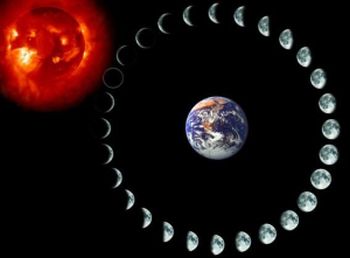
Think of the tiny monthly cycle of the Sun and Moon. The New Moon takes place in darkness. Only when that first magical waxing crescent appears after 2-3 days, does the energy of the cycle begin to build. After a week, first quarter, things are taking shape. At full moon, the cycle’s energy is in full light, at its most obvious. A week later, on the waning square, the Moon is shrinking, the month’s energy on the wane. Then the last, waning crescent precedes Moondark, those 2-3 days in which the energy of the completed cycle sinks back into the Void, waiting for the energy of the next New Moon to arise.

Applying the same template to the 11-12 year cycle of Jupiter, it takes a year or so for the initial upsurge of desire for new expansive challenges to stabilise and take definite form.

Jupiter in action: a real-life example

 Let’s use the person with Jupiter in Sagittarius in the 9th House as our example. At the age of 23, off she goes to Australia, completes her Diploma, and obtains a good teaching job in Melbourne. She works there for a couple of years, then relocates to Sydney (first quarter phase, Jupiter now in Pisces) since she wants to take up sailing and she has a friend there who runs a sailing school.

 Three years later (full moon phase, Jupiter in Gemini) she agrees to take on a teaching job at the sailing school where she has been a student. Another three years go by, and she begins to become dissatisfied and critical (last quarter phase, Jupiter now in Virgo). She is becoming bogged down in admin and paperwork. Not her style! 

She puts less and less commitment into her job, and after over ten years in Australia, she has itchy feet again (moondark). Nearly twelve years after arriving, full of enthusiasm, she is off to work in the Greek Islands. She has fallen in love with a Greek Australian and decides to return with him to his home island of Rhodes. She is nearly thirty-six years old. A new Jupiter cycle is about to begin…

Working with our Jupiter cycles

I’ve always found that astrology students and clients are fascinated when you consider their major cycles with them, as well as finding it helpful in understanding the unfolding pattern of their lives. The Jupiter cycle is a particularly easy one to which to connect. The rhythm of the cycle, looking back, can usually be tracked.

In the last year or two before a new 11-12 year period begins, one can generally perceive a certain dissatisfaction, boredom, loss of any great interest, and desire for a new challenge in the sphere of life indicated by the sign and house placement of Jupiter natally. If Jupiter is a very strongly placed and emphasised ‘character on the stage’, the overall effect is of course amplified.

With Jupiter in Scorpio in the third house, I clearly recall my boredom, restlessness, and desire for a new educational project towards the end of my fourth Jupiter cycle when I was forty-six or forty-seven. “Alexa”, with her Jupiter in Cancer, bought a house at the start of the second Jupiter cycle when she was twenty-four, “… bigger (Jupiter) than we needed for just the two of us, so we could have space for lodgers.”

Are you a year or two into a new Jupiter cycle? Or three years into it? After five or six years, the cycle is at its Full Moon phase, its peak of energy. By nine years, impetus generally is on the wane, and restlessness setting in. By the Moondark phase of the cycle, it really feels like time for a new project, a new venture. But you know, if you are familiar with this cycle’s rhythm, that it will probably be another year or so before the new idea has taken shape and translated itself into a fresh, exciting direction. 

One of the great gifts of astrological knowledge is the help it offers in setting our sails, metaphorically speaking, to the prevailing winds of our lives. It is useful to get to know your Jupiter cycle, in planning those times in life when your Spirit is calling you to open up your life to new experience. I do hope this introductory article has given you some useful food for reflection – and impetus to action!

It would be helpful in the meantime if any readers feel like sharing their experiences of Jupiter cycles. In this way, we all expand our understanding…Thanks!
Zodiac

Zodiac

2000 words copyright Anne Whitaker 2016
Licensed under Creative Commons – for conditions see Home Page


Thinking about Saturn: the Second Saturn Return and Beyond

In keeping with the transiting retrograde Mars/Saturn midpoint squaring my natal Ascendant, I have been feeling pretty Saturnian of late. Much is written about the first Saturn Return; not so much, about the Second. So, for those of you going through this crucial rite of passage at present – and anyone else who feels like a spot of advance planning! – here are my thoughts:

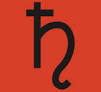
Saturn

Saturn

By the second Saturn return, we can see what our lives have become — and we can see what it is too late to change. This is one of the most fundamental differences in perspective between the second and the first return. At age 30 we have probably still to sow the most productive seeds of our lives — what we have already sown is still only germinating. But by the approach of 60, we are reaping the harvest and are confronted with the stark Biblical words “As you sow, so shall you reap.”

Saturn is the planet of strict justice. Blind, stubborn, arrogant, or fearful refusal to face certain basic realities in life, as the second cycle unfolds, skews the life path further and further away from who we could become – were we able to acknowledge and accept who we actually are – rather than try to be who we are not. This can bring increasing pain, dissatisfaction, emptiness, and depression as the second Saturn return approaches.

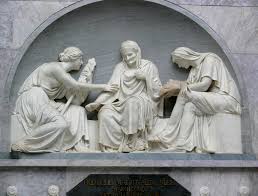
Franz Hals: an image of serene later life

At one end of the spectrum are those who arrive at this stage feeling that their time on this Earth has not been wasted. They have very few regrets and are prepared to face the final thirty-year cycle of life with equanimity, perhaps rooted in great spiritual depth. These people usually retain a zest for life and its remaining possibilities.

At the other end are those who have sown meanly, poorly, or fearfully, and are reaping a harvest of regret, bitterness, loneliness, physical ill health, and fear of the waning of physical power and attractiveness in the inevitable decline toward death.

Most of us will arrive somewhere in the middle range: satisfied with some aspects of our achievement and disappointed by our areas of failure — or those things that fate appears to have denied us without our having had much option for negotiation.

I see the main challenges of this stage as follows:

* first, to value what we HAVE been able to do

*second, to come to terms with and accept those failures or disappointments that it is now too late to change

* third, to find, within the limitations and constraints imposed by our state of mind, body, spirit, and bank balance, some further goals that are realistically achievable, which bring a sense of meaning and enjoyment to whatever time we have left.

Recommended book: 

Saturn A New Look at an Old Devil

  Saturn: A New Look At An Old Devil
by Liz Greene
.

  Info/Order book.

______________

ENDNOTES

The full text of this article “The cycles of Saturn: Forging the Diamond Soul” was first published in the UK’s ‘Astrological Journal’ (Nov/Dec 1996), and subsequently in ‘www.innerself.com’ and ‘The Mountain Astrologer’ (Feb/Mar 1998)

It was  included in  The Mountain Astrologer’s “Editor’s Choice” : 43 previously out-of-print articles from TMA in the 1990s, available on CD from the autumn of 2010.“The Mountain Astrologer” is recognised as the world’s leading astrology magazine.)


Zodiac

********************

550 words copyright Anne Whitaker 2016
Licensed under Creative Commons – for conditions see Home Page

What is astrology’s place in our contemporary world?

I’m happy to say that I am guest blogging again on the Mountain Astrologer magazine’s blog this week, with

Some thoughts on the place of astrology in our contemporary world:

“We live in a vast energy field of constant motion, most of which is invisible to us. The rippling patterns of order and chaos, which is the fundamental dance of creation, govern everything. I have come to see the art of astrology (helped by what I have grasped of what the quantum world has revealed to us) as one that enables us to map those patterns via the constant shifting energies of the planets in their orbits…”

To read the rest of this post, click HERE

Zodiac

***********************

150 words copyright Anne Whitaker/The Mountain Astrologer magazine 2016

Licensed under Creative Commons – for conditions see Home Page


How did the sign of Virgo get its name?

While I am away on a short break, here is an early post, from my back catalogue – very rarely commented on ( go on!! ) but very frequently read:

Virgo‑Zodiac‑Sign

To read the post, click below:

https://astrologyquestionsandanswers.com/2013/07/09/why-is-the-zodiac-sign-of-virgo-called-the-virgin/

******

  • 50 words copyright Anne Whitaker 2016

    Licensed under Creative Commons – for conditions see Home Page

What are the major planetary events of 2016? Question answered here!

Just when I was thinking of putting together a list of 2016’s major astrological events I’ve found the list of those very events on Leah Whitehorse’s excellent site, Lua Astrology. Many thanks, Leah, for compiling this key for us. I will certainly be printing it off and keeping it beside me for reference for the rest of the year.

Here is the link:

And ” What does it all mean?” is sure to be the next question. Well, astrology students out there, go and work it out for yourselves! If you want some help in doing so, there are many excellent astrology sites who will be reflecting from varying perspectives, on what the complex planetary picture for 2016 is likely to symbolise for us at both a collective and a personal level.

Here are a few for starters:

StarIQ

The Mountain Astrologer Magazine and The Mountain Astrologer Blog

Astrology News Service

The Horoscopic Astrology Blog

Enjoy your research! – and do leave any useful information pointers on this topic which you may wish to add, in the comments section. Thanks and all good wishes for Aries New Moon Year 2016 to everyone!

Zodiac

***********************

200 words copyright Anne Whitaker/Leah Whitehorse 2016

Licensed under Creative Commons – for conditions see Home Page


Aries New Moon – and the year’s Moondark…

From the depths of antiquity right through until the general advent of electric light in the early part of the twentieth century, humans have been powerfully influenced by the 29.5 day cycle of the Sun and Moon.

The Sun/Moon Cycle

The Sun/Moon Cycle

The power of the Sun/Moon cycle

They hunted in daylight, made long journeys by the light offered by the Moon as it moved to full illumination of the night sky 14-15 days into the cycle. They timed their most powerful magical/religious rituals to coincide with the Full Moon. Ancient peoples gradually came to understand, as the age of agriculture took root and developed, that the time to plant their crops was when the Moon was waxing in the early part of the 29.5 day cycle, and in the Spring, or waxing, part of the year.

Out of those practical observations of the heavenly bodies, so fundamental to survival in humanity’s early days, came the realisation so beautifully put in the Bible:

“To every thing there is a season, and a time to every purpose under the heaven…” {Ecclesiastes 3:1-8 King James Version (KJV)}

The planetary cycles, from the tiny 29.5 day Sun/Moon cycle to that powerful regulator of human affairs, the 20 year Jupiter/Saturn cycle, were recognised in antiquity as weaving all life including that of human beings into an observable rhythm which brought a context of order, structure, and some comforting predictability to the patterns of life on Earth.

But whether the cycle is huge, like the Neptune/Pluto 500 year one which was not known in antiquity, or small, like the monthly Sun/Moon one, the same basic stages apply: seeding, germinating, sprouting, flowering, ripening, harvesting, dying back in preparation for the new.

All cycles’ 12th House phase

Moondark describes the end of any cycle – the 12th House phase – whether we are contemplating the monthly Sun/Moon one or the epoch-defining Neptune/Pluto cycle. It is the time of withdrawal and dissolution of energy think of wintertime, the stripped trees, the cold, barren earth – a time of dark power in which the old order dies at a number of different levels, so that fertile energy can emerge from the womb of the night: indeed, a time of “dying back in preparation for the new.” Thus, every year, the time from the New Moon in Pisces to the New Moon in Aries can be seen as the 12th House phase, the Moondark time, of the entire zodiacal year.

Moondark has fascinated me for a long time. I may first have encountered the concept in my twenties, through the agency of Marion Bradley’s magnificent novel “The Mists of Avalon”, set in the time of druidical Britain in the era when Christianity was sweeping through the Roman Empire and the Old Religion of the Druids was being violently challenged as a result.

The legendary King Arthur, disregarding the advice of his Druid priests, married Guinevere in a Christian ceremony – at Moondark, the very end of the Sun/Moon monthly cycle. Since Arthur was a king, getting the symbolism of his marriage right was much more important than it would be for ordinary mortals! “Woe, woe, no good will come of this!” was the view taken by the Druids. They were right. The marriage was childless; moreover, Guinevere spent much of it in love with Lancelot, one of the knights of King Arthur’s fabled Round Table.

Each year’s Moondark

We tend to think of the annual 20th March equinox, the day that the Sun enters the sign of Aries, as the symbolic beginning of spring in the Northern Hemisphere. But you could argue that the true beginning of spring is when a New Moon takes place in the sign of Aries. In 2016, that celestial event occurs on 7th April, both Sun and Moon meeting at 18 degrees of Aries, the fiery first sign of the zodiac. The degree of their meeting varies from year to year: in 2015, it was 28 degrees Aries; in 2014, 10 degrees; in 2013, 21 degrees; in 2012, 2 degrees– on that occasion very close to the 20/3/12 spring equinox.

I find it illuminating and helpful to think of each year in those terms. Thus – as we wait for the fresh energy upsurge of the Aries New Moon this week, we are symbolically waiting in Moondark. This year’s Moondark has been especially potent; it has run from the 19 Pisces New Moon on the 9th March, which was a total solar eclipse.

Events of a collective and personal nature have been powerful, dark and traumatic this Moondark: the combination of a total solar eclipse, the following lunar eclipse at 3 degrees Libra on 23rd March, and Saturn’s station at 16 deg 24 mins Sagittarius from 23rd to 29th of March with his turning retrograde on Friday 25th – Good Friday in the Christian calendar – certainly brought us experiences of symbolic crucifixion.

Collectively, the worst of several horrors from 23-29 March 2016 were the dreadful terrorist massacres in Brussels, Belgium and Lahore, Pakistan. At a personal level, I heard many stories of deaths, and injuries. There were two murders in my home city of Glasgow, Scotland, UK during that period. We experienced a death in our extended family,  after one member’s long period of great suffering. A close friend fell and is still hospitalised. Other friends are also dealing with traumatic events which flared up during that period.

The uses of Moondark

Moondark is at its best a contemplative time: a time to take stock both collectively and personally. We live in an increasingly frenetic 24/7 society where ‘time out’ is increasingly hard to find, and is not supported by the culture as a whole. Those of us who wish and need to retreat regularly to preserve our balance and well-being tend to be regarded as odd by mainstream society.

But humans have always benefited from times of quiet contemplation, in whatever way suits them best: listening to music, doing yoga/meditation, praying to whatever Higher Power sustains them, making or contemplating art, walking in Nature –especially by the sea, that great universal symbol of dissolution and emergence.

Even half an hour a day of retreat time on a regular basis is nourishing for the spirit. In ancient times, women used to retreat together monthly during menstruation time which was seen as a period of potency, and hidden power – a liminal time to link through dreams and ritual to worlds unseen.

It would be good if individually we could get into the habit of using the time from the Pisces New Moon each year to find some retreat space in whatever way suited us: to take stock of the year that was coming to an end, ponder our successes and our failures, and set some realistic intentions to pursue for the zodiacal year ahead. Will you be taking stock this week? I certainly shall…

Happy Aries New Year when it comes!

Aries New Moon 7.4.16

Aries New Moon 7.4.16


1150 words copyright Anne Whitaker 2016
Licensed under Creative Commons – for conditions see Home Page
Six things I love about astrology: for World Astrology Day

(i)

“SIX THOUSAND YEARS AGO, WHEN THE HUMAN MIND WAS STILL HALF ASLEEP, CHALDEAN PRIESTS WERE STANDING ON THEIR WATCHTOWERS, SCANNING THE STARS.”

( from The Sleepwalkers by Arthur Koestler )

Astrologers at Work

Astrologers at Work

I love knowing that the rational, mythical, symbolic and empirical art of astrology has been around for at least six thousand years. Our increasing contemporary awareness of the interconnectedness of all things was well known in antiquity: the ancient maxim “As above, so below” still applies. Astrologers operate on the margins of our fragmenting, reductionist culture. But we represent an unbroken line to a time which in many ways was wiser than ours is now. Being a tiny thread in that weave gives me a deep sense of pride, connectedness and rootedness.

(ii)

I love being able to look out at the night sky, seeing the beauty of the lunar cycle and the visible planets in their ever changing, ever repeating patterns, knowing that being an astrologer offers one the privilege of perceiving not only astronomy but also symbolic meaning out there.

I can still recall the exhilaration I felt on a freezing cold, clear night in January 1986 on a visit to the Outer Hebrides. My brother, a Merchant Navy captain, was able to point out Saturn to me – the first time I had ever seen that venerable planet with the naked eye. Saturn’s meaning was also present that night; we were on our way back from the wake for an old uncle who had just died.

(iii)

I love the fact that I started out as a dismisser of our ancient art, and ended up its devoted practitioner – having set out to confront my embarrassment at the inexplicable fascination I had developed for a subject which I considered to be beneath my intellectual consideration! This is the typical position of ignorance combined with arrogance from which many people dismiss astrology, not   realising there is a subject of great depth and power beyond the Sun Signs of astrology’s public face.

I embarked on a course of study with the Faculty of Astrological Studies in the early 1980s – to prove to myself through study rather than ignorant dismissal that there was nothing in astrology – and have kept up an unbroken interest since then for over 30 years. If you want to read the strange story of how my astrological career began in a launderette in Bath, England, UK, check out the link below!

Beyond the Sun Signs

11th Century Horoscope

11th Century Horoscope

(iv)

I love how literal astrology can be. Saturn met Neptune in November 1989 and the Berlin Wall came down. There was a Jupiter Uranus conjunction in Libra in July 1969 when a huge co-operative effort of unique scientific endeavour put the first human on the Moon. The day Pluto first went into Sagittarius in January 1995, there was a massive earthquake in Japan and the city of Kobe went up in flames. At that same time, John Paul, the best-travelled Pope ever,  preached to an open air audience of over a million people in Manila in the Philippines.

To lower the tone somewhat, I was having lunch with a bank manager friend of mine on the day Saturn turned retrograde on my Scorpio IC. For no apparent reason (being sober at the time!) I passed out, just as another bank manager and friend of my friend was passing the restaurant window. They both ended up carting me home between them.

(v)

I love the impossibility of ever getting on top of, or to the end of, one’s astrological studies. I have never applied myself to eg Chinese or Hindu astrology, not yet feeling I have enough of  a grasp of the Western tradition into which I was born….and you can do hundreds or thousands of horoscope readings, teach hundreds of classes with thousands of students, and someone will STILL come up with a  manifestation of eg Venus combined with Saturn or Mercury combined with Neptune, which you have never before come across or thought of.

(vi)

I love astrology for the help it has given me (and countless other people who are willing to look within and try to be honest about themselves) in understanding the quirks and complexities, the gifts and pains of my personality and life pattern. My studies began as the next step in a lifelong quest to prove that our existence has some meaning, that we are not just butterflies randomly pinned to the board of fate, that we are each here because we have something unique to contribute to the Big Picture.

Astrology has provided me with that proof. For that, and to that unbroken line of students and practitioners of our great art stretching right back to those ancient Chaldeans on their watchtowers, I will be forever grateful.

Thank you.

***********

800 words copyright Anne Whitaker 2016
Licensed under Creative Commons – for conditions see Home Page

*******************************

Talking about Renaissance Astrology…

Here is an interesting recent programme from BBC Radio 4’s wonderful “In Our Time” series which has been hosted forever ( it seems!) by Melvyn Bragg, a Renaissance Man of our time if ever there was one. It’s not often you get the BBC talking about astrology, so check this one out! And do let me know what you think of it…

Astrologers at Work

Astrologers at Work

Melvynn Bragg on Renaissance Astrology

Zodiac

Zodiac

100 words copyright Anne Whitaker 2016

Licensed under Creative Commons – for conditions see Home Page